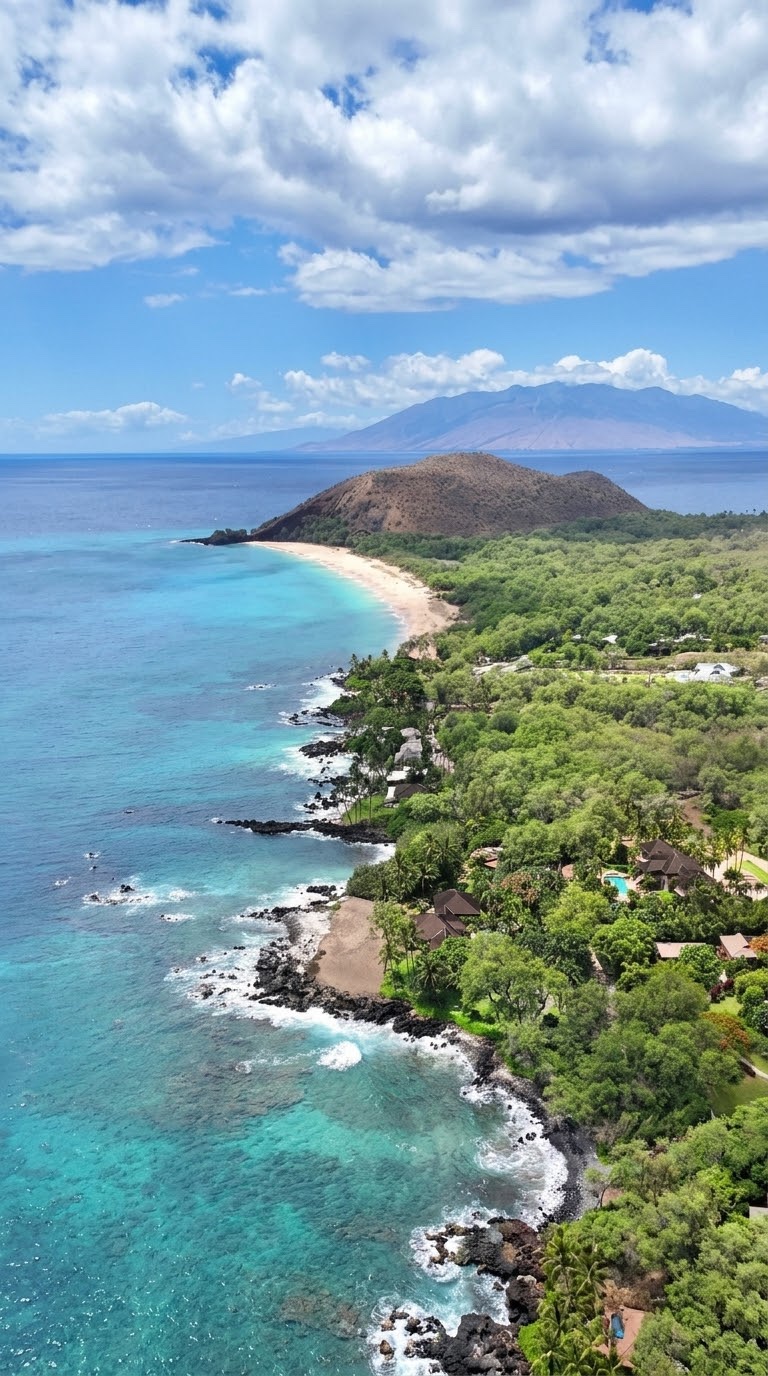
★ Wonders
Maui
Worth making time for
In February, the water between Maui, Lanai, and Molokai gets so full of humpback whales that captains call it whale soup.
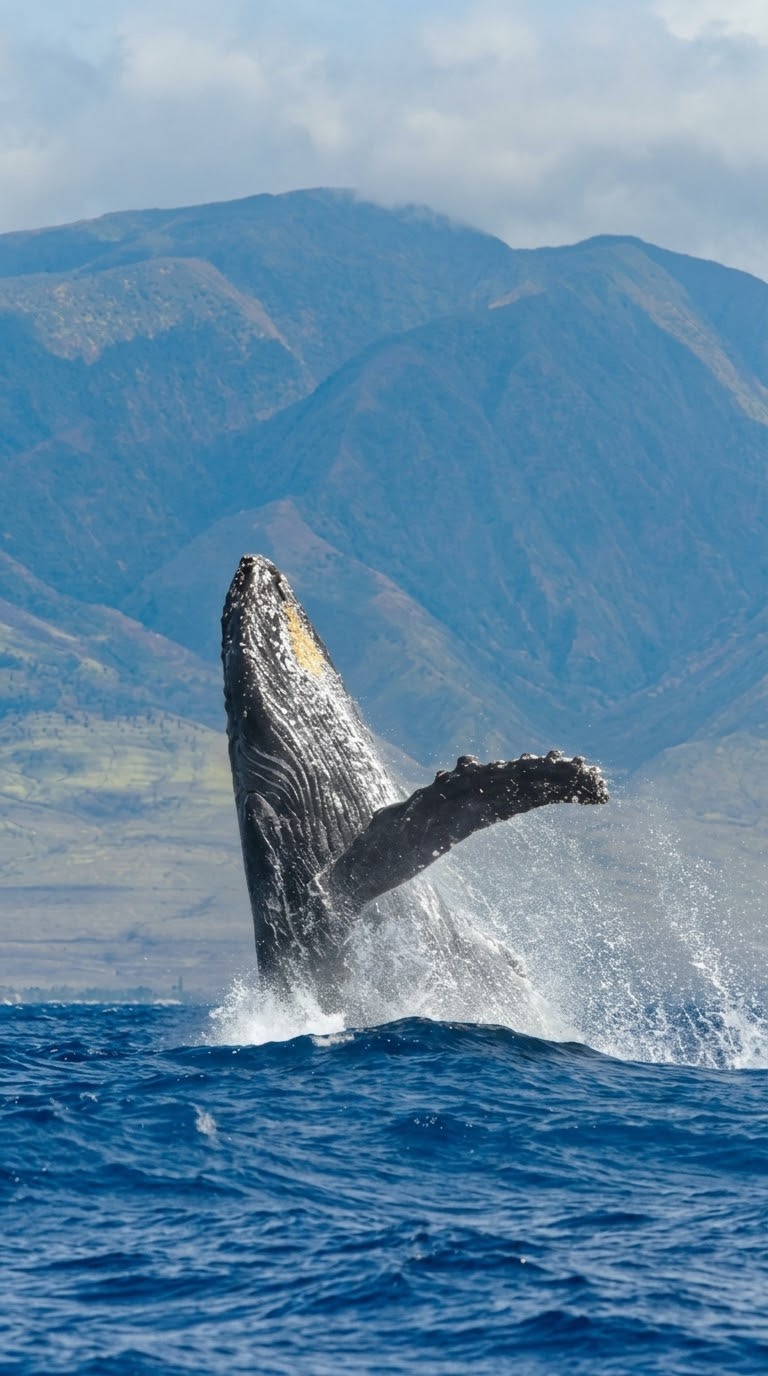
In February, the water between Maui, Lanai, and Molokai gets so full of humpback whales that local boat captains have a name for it. They call it whale soup. Spouts rise in every direction, tails lift and fall, and a breach can land close enough to make a whole boat gasp at once. It is not a rare sighting or a lucky day. At the peak of the season, this is simply what the channel looks like.
More than 10,000 North Pacific humpbacks travel from Alaska to Hawaii each winter to breed and give birth, and most of them gather in the shallow, sheltered water around Maui. The season runs from December through April, but January through March is when the density is highest, and February is the thick of it. Mothers nurse calves in the calm shallows while males sing underwater and compete at the surface, breaching, slapping their tails, and chasing each other in groups called heat runs. A morning boat is the best bet, when the sea is calmest and the whales are most active.
The Au'au Channel is the heart of it. This stretch of water between Maui, Lanai, and Molokai is shallow and protected, which is exactly why mothers choose it for their calves. Boats leave from Lahaina Harbor and Ma'alaea Harbor on Maui and head straight into the channel, where whales are often so close that the boat does not need to search for long. Many tours carry a hydrophone, so you can hear the males singing below the surface, a low, looping sound that carries for miles. The honest caveat is that whales are wild animals and no captain can promise a breach. What the channel can promise, in February, is numbers. Even on a quiet morning, spouts are rarely out of sight.
You do not need a boat to see the soup. Papawai Point, a roadside lookout on the coast between Ma'alaea Harbor and Lahaina Harbor, is one of the best shore watching spots on Maui, and it costs nothing. Bring binoculars and give yourself time. From the cliff edge you can watch spouts, tail slaps, and the occasional full breach across Ma'alaea Bay, with Lanai and Kaho'olawe on the horizon. Parking is limited and the point gets busy at sunset, so a morning visit is calmer. The trade off against a boat is distance. You will see the scale of the gathering better from shore, but you will not hear the singing or feel how large a whale is when it surfaces nearby.
These two harbors are the practical bases for the channel. Ma'alaea Harbor, on the central south coast, is the closest launch point to the heart of the channel, and Kihei, just south of it, is home to the NOAA humpback whale sanctuary visitor center, where you can learn what you are seeing before you go out. Lahaina Harbor, on the west coast, has the larger harbor and more tour choices, from big stable catamarans to small rafts that sit low on the water. Roughly, a standard group tour runs about $50 to $90 per adult, and a small raft tour runs higher, roughly $95 to $160 per adult. Book early for January and February, when the best morning departures fill first. Boats must stay 100 yards from the whales, and swimming with humpbacks is not allowed, but whales often approach on their own, and that is when the encounter feels closest.
Go in February if you can. That is when the channel earns its nickname, and when a single morning can hold more whales than most people see in a lifetime of ocean trips.
Would you want to experience any of these someday?