★ History
Castel del Monte
Worth making time for
Three castles that were never meant for war, built to please one mind.
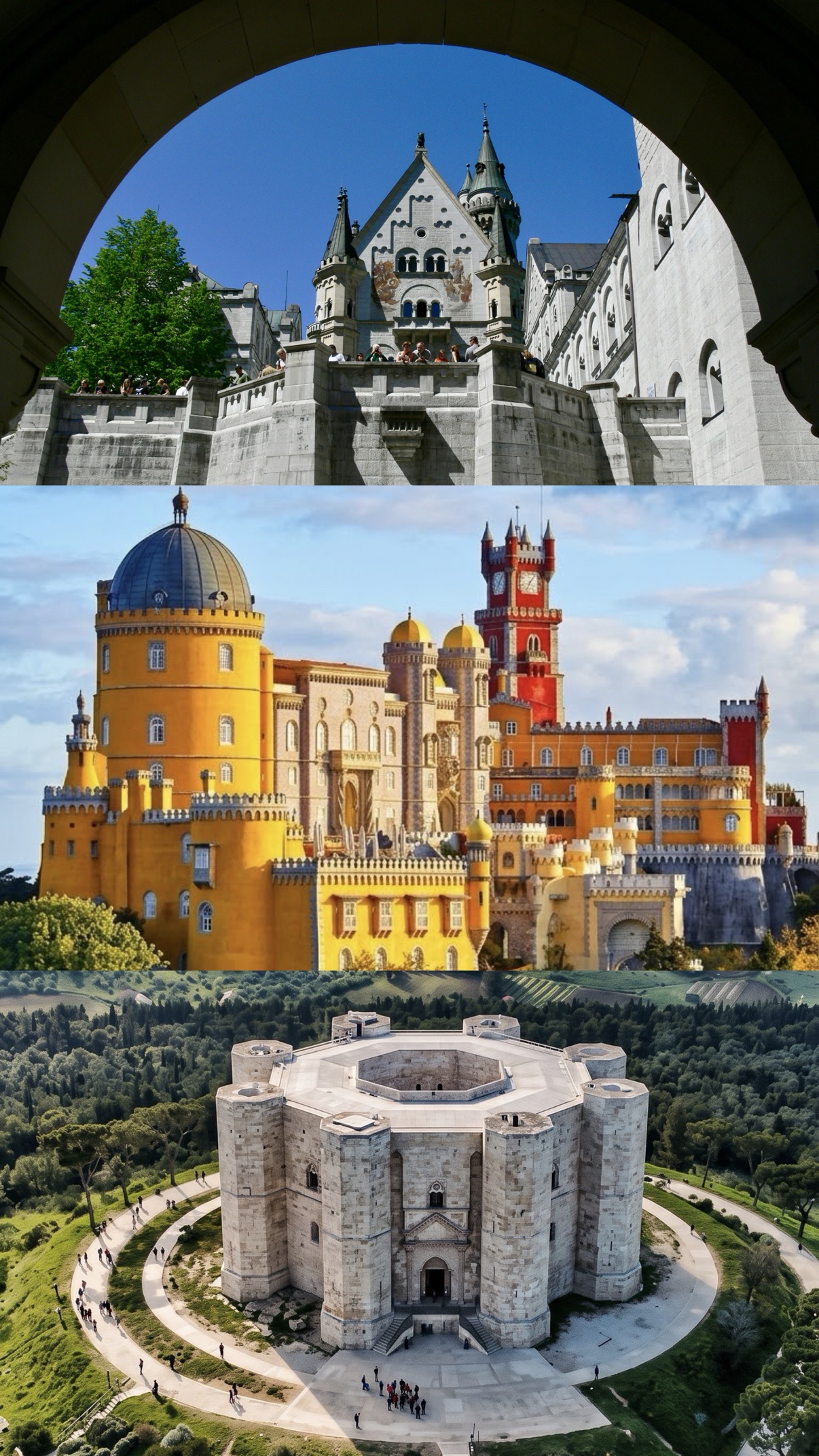
For a thousand years, European castles had one function. Defense. They rose on hilltops to spot enemies coming, and near rivers to guard crossings and trade, in the centuries when raiders like the Vikings could sail up a river and strike far inland. Thick walls, narrow slits for arrows, a gate that could hold against an army. These three were built for the opposite reason. No army was coming. Each one is the work of a single ruler who wanted to put a personal vision in stone, a fantasy, a dream of perfection. Here are three castles that were never meant for war.
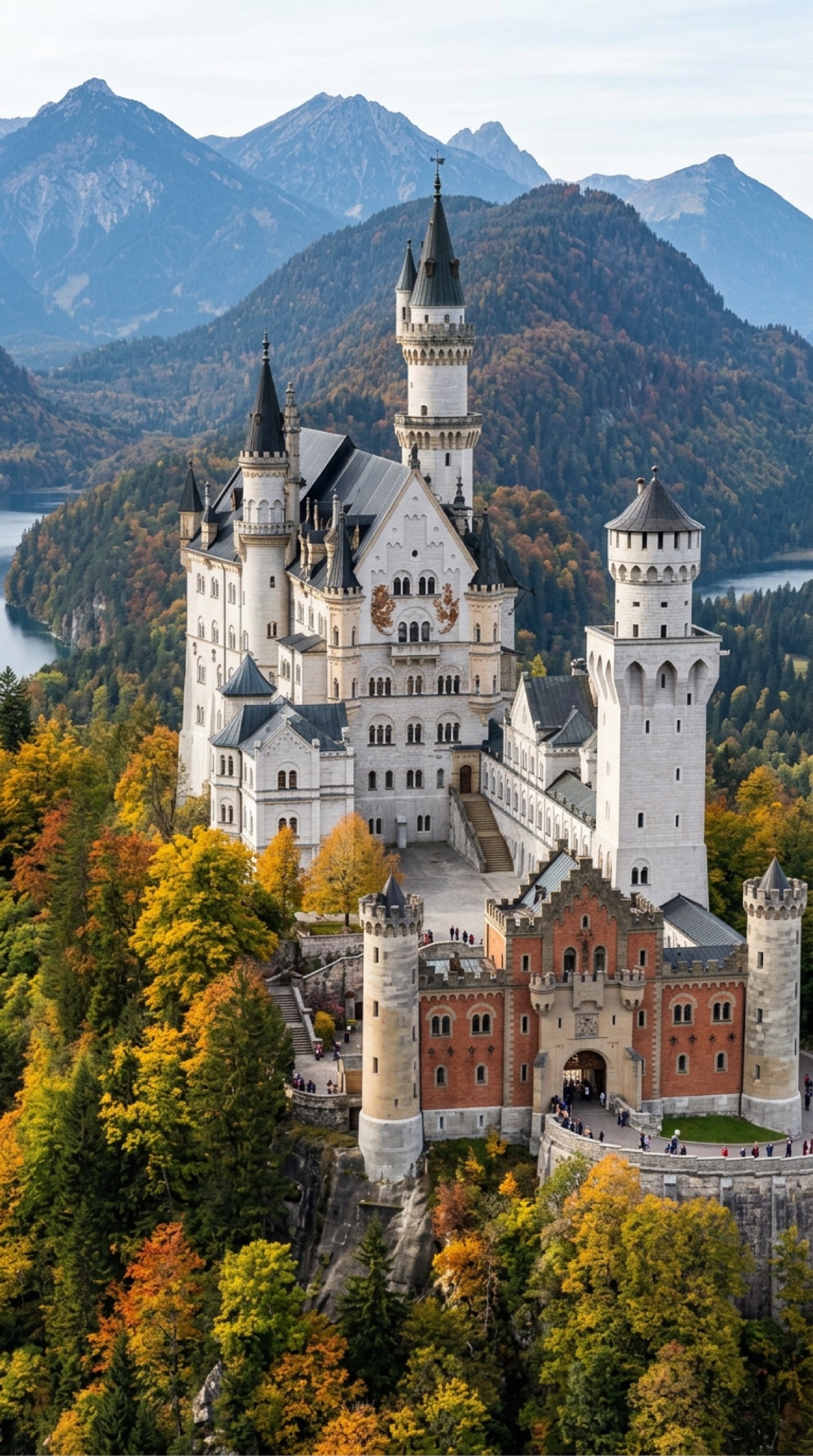
In the Bavarian Alps near Füssen, about two hours southwest of Munich, Ludwig II of Bavaria began Neuschwanstein in 1869. It was never a fortress. It was a private stage set for Wagner's operas and Germanic legend, built by a king who lived more in music than in politics. Its white towers became the world's template for the fairy tale castle, Disney's included. Cross Marienbrücke, the bridge above the gorge, for the classic view. Every September a week long concert series fills the Singers' Hall. The interior is seen only on a guided tour, and timed slots sell out weeks ahead in season, so book once your dates are set.
On a ridge above Sintra, about 30 kilometers west of Lisbon, Ferdinand II built Pena Palace between 1842 and 1854. A German prince who had married Portugal's queen, he bought the ruins of a monastery damaged in the 1755 earthquake and turned them into a Romantic fantasy in red and yellow, mixing Gothic towers, Moorish arches, and Manueline stonework. Around it he planted a park with trees from around the world. It was a summer retreat and a work of art, finished about thirty years before Neuschwanstein. In 1995 it joined the UNESCO World Heritage list with the rest of Sintra.
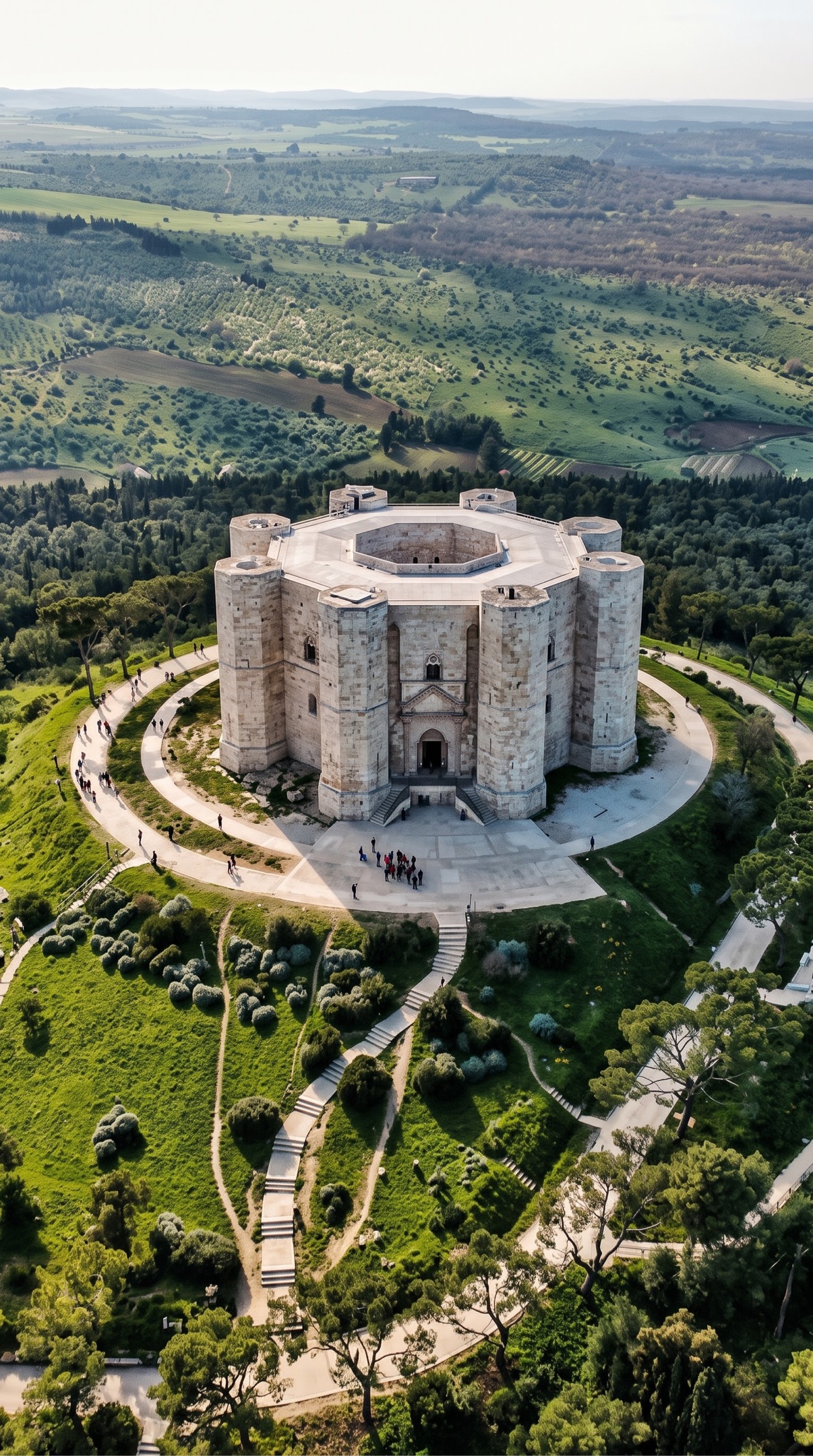
On a bare hill in Apulia, about an hour inland from Bari, Frederick II raised Castel del Monte around 1240, and he was no ordinary emperor. Called Stupor Mundi, the Wonder of the World, he spoke six languages, kept Muslim guards, and was excommunicated twice by the Pope. His castle follows the same strange logic. Eight towers, eight rooms on each floor, yet no moat, no drawbridge, no well, and no real defenses. No one has settled what it was really for. It was an idea in the shape of a castle, not a weapon.
None of these three ever stopped an army, because no army ever needed stopping. They were built to please one mind, and that is why they still please everyone.
Would you want to experience any of these someday?