★★ Wonders
Walk the White Terraces of Pamukkale
Worth a detour
Every civilization has had the same idea. When the air turns cold and the body asks for relief, travel to the hot water.
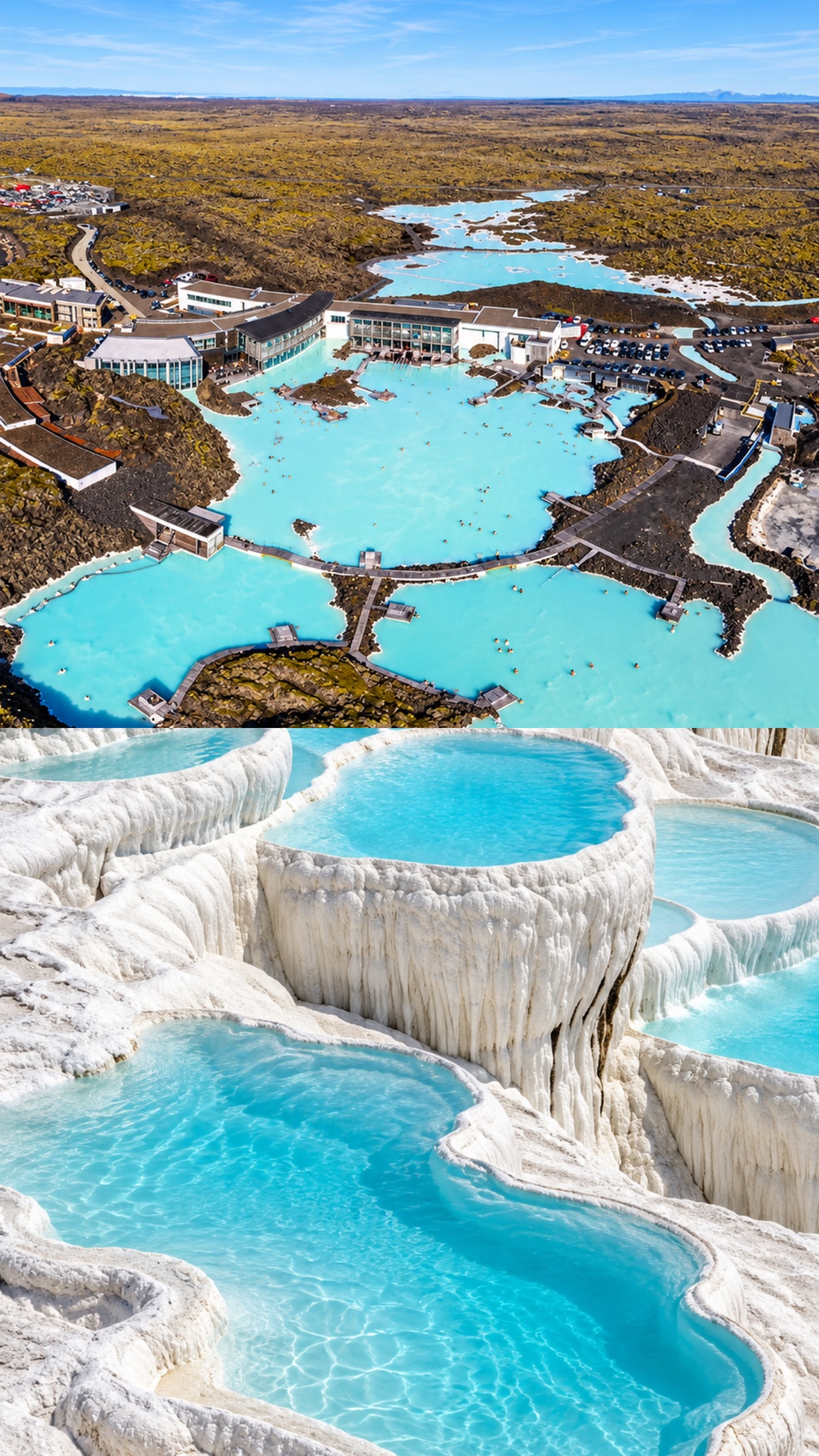
For 2,000 years, people have traveled to hot waters. The Romans built a city around it. The Americans protected it by law before they had national parks. Autumn is when the old tradition makes the most sense. Cold air on your face, hot water up to your shoulders, steam rising between them. Here are four places where the tradition lives on.
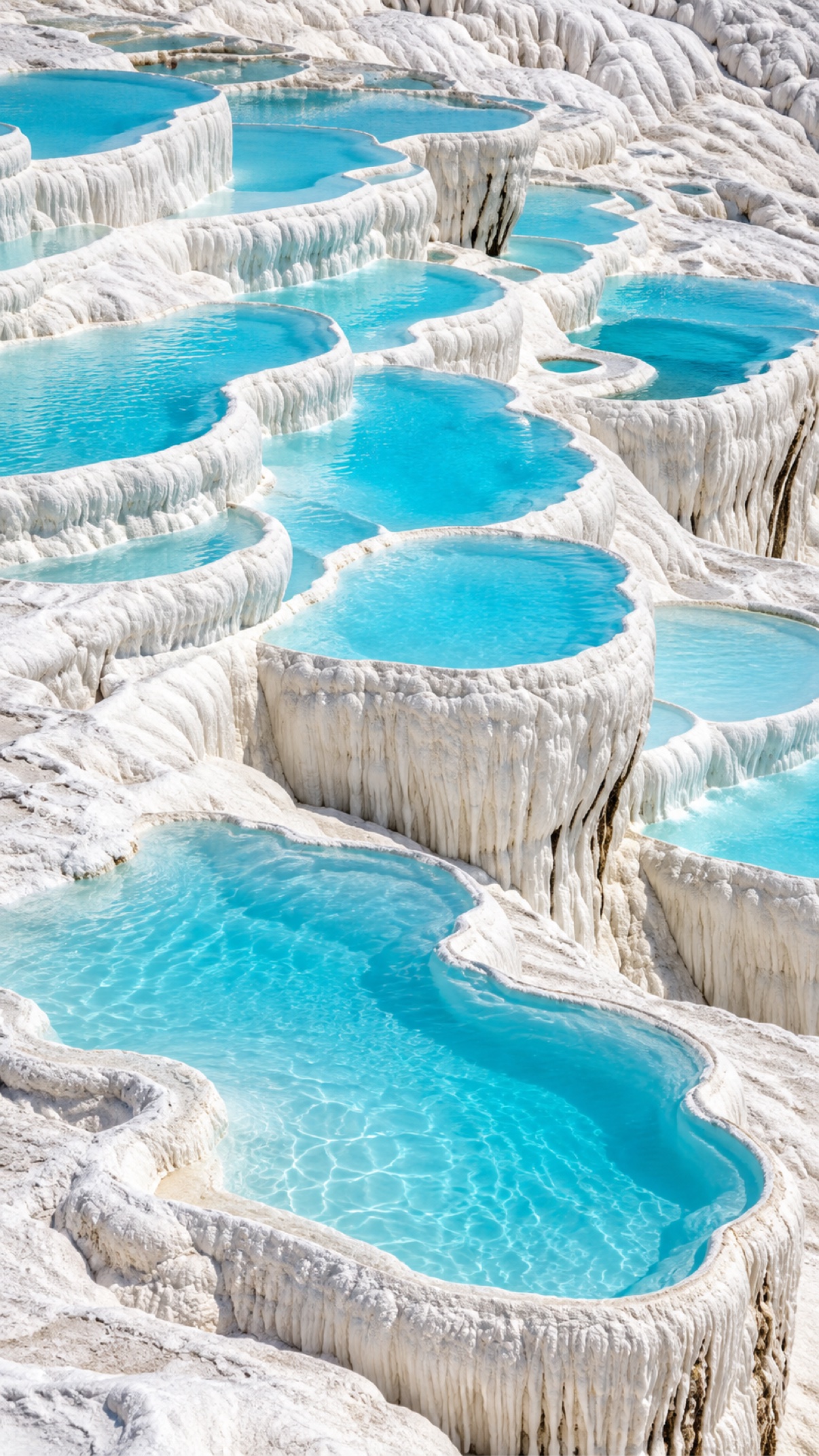
Pamukkale and Hierapolis, Turkey
A white cliff of travertine terraces, built drop by drop over fifteen thousand years as calcium rich thermal water cooled and hardened. You walk it barefoot, wading the warm shallow channels between the basins. Real soaking happens next door at Cleopatra's Pool, where you swim in clear 36 degree water over toppled Roman columns.
Above the terraces stands Hierapolis, founded around 190 BC because of the springs. Romans traveled across the ancient world to bathe and worship here, and the necropolis outside the walls holds some 1,200 tombs of people who came for the cure and never went home. September and October are the sweet spot, mild days and thin crowds. Note that the terrace pools are for wading only, not swimming.
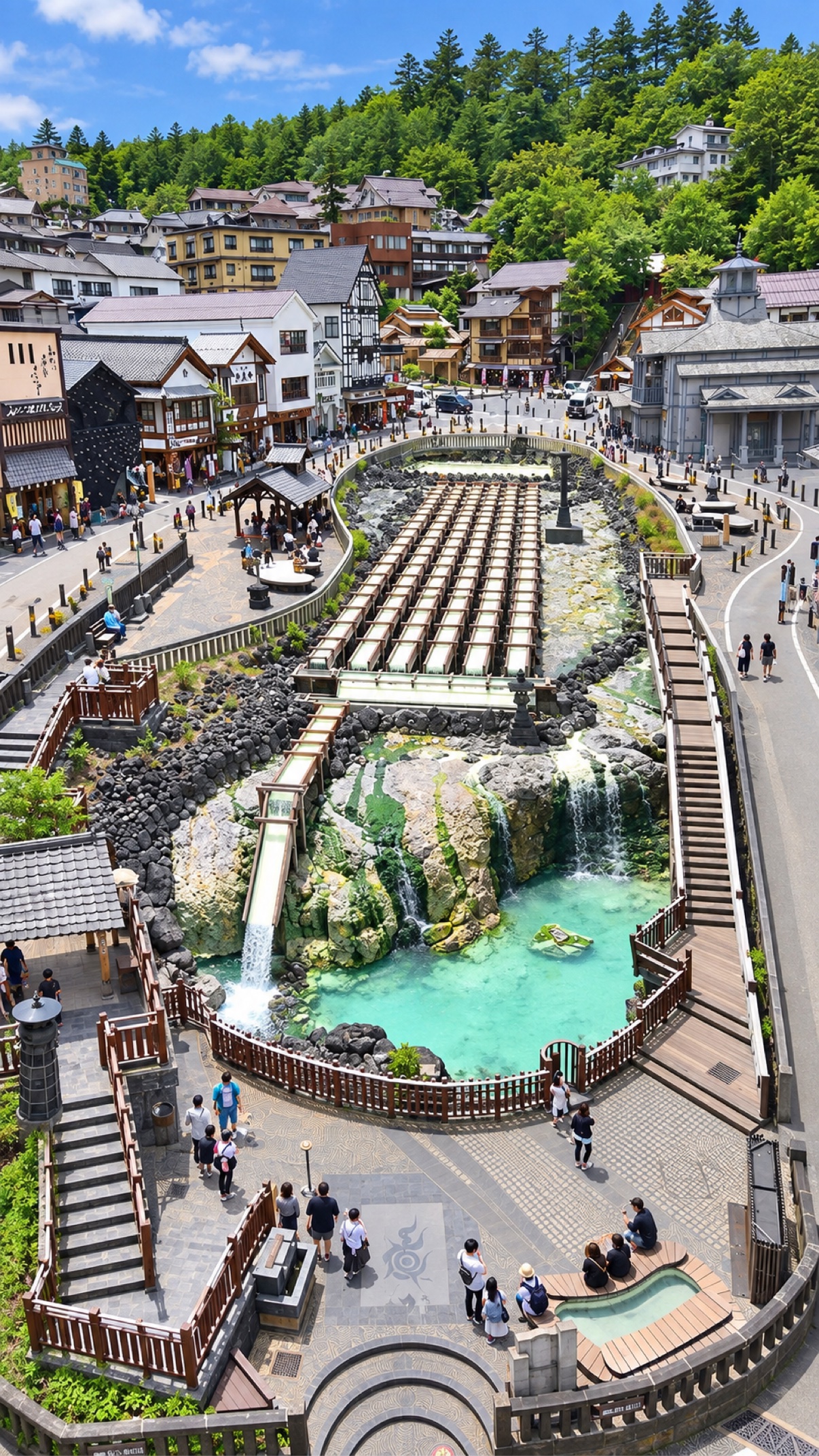
Kusatsu, Japan
One of Japan's Three Famous Springs, named in 1502. The water arrives at 95 degrees, too hot to touch, so the town cools it by stirring with long wooden paddles instead of diluting it, because the minerals are the medicine. The stirring became a daily performance with folk song, staged by the steaming Yubatake field in the town center. The local saying goes that the water cures everything except lovesickness.
Kusatsu sits at 1,200 meters in the mountains of Gunma, about three hours from Tokyo, and late October brings the fall color. This is the most ritual of the four. Wash thoroughly before entering, never let your towel touch the water, and let the town's harsh, healing water do the rest.
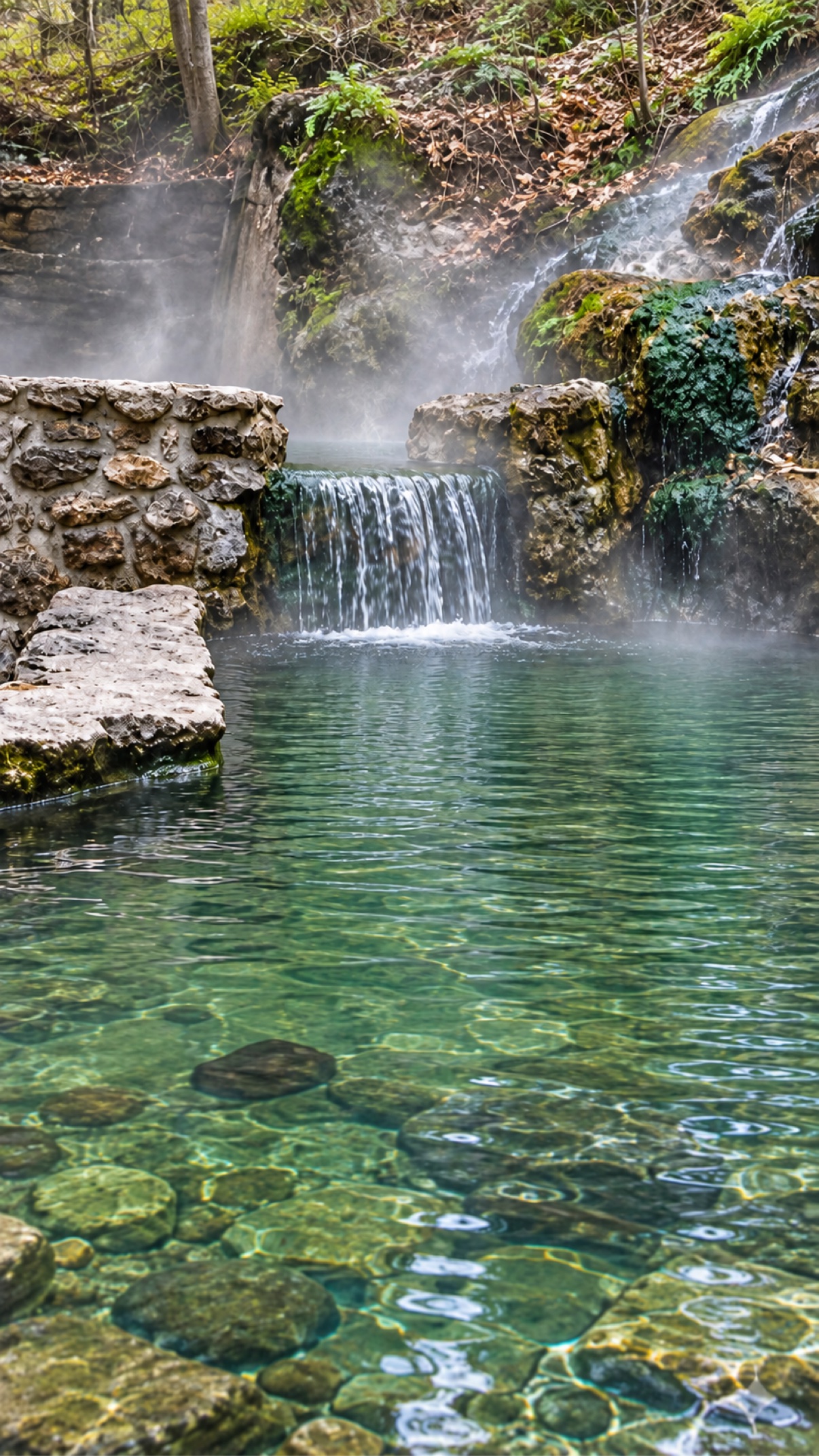
Hot Springs, Arkansas
In 1832 President Jackson signed the act reserving these springs for the public, the first land the American government ever set aside, on the radical idea that healing water belongs to everyone. The town that grew around it took the motto "We bathe the world," and at its peak gave over a million baths a year.
Bathhouse Row still stands, eight grand bathhouses in a row, and the remarkable thing is that the ritual never stopped. At the Buckstaff bathhouse you can still take the traditional thermal bath, the spring water running straight from the mountain into the tub, the way people did it in 1912. Next door, the Fordyce bathhouse is now a museum, all marble and stained glass, a walk through the era when this town gave a million baths a year. And none of it requires being rich or well connected. The water comes out of the ground hot, and the town built itself around keeping it public. That was the idea in 1832, and it still holds. Fall is the consensus best season, with foliage in the Ouachita Mountains.
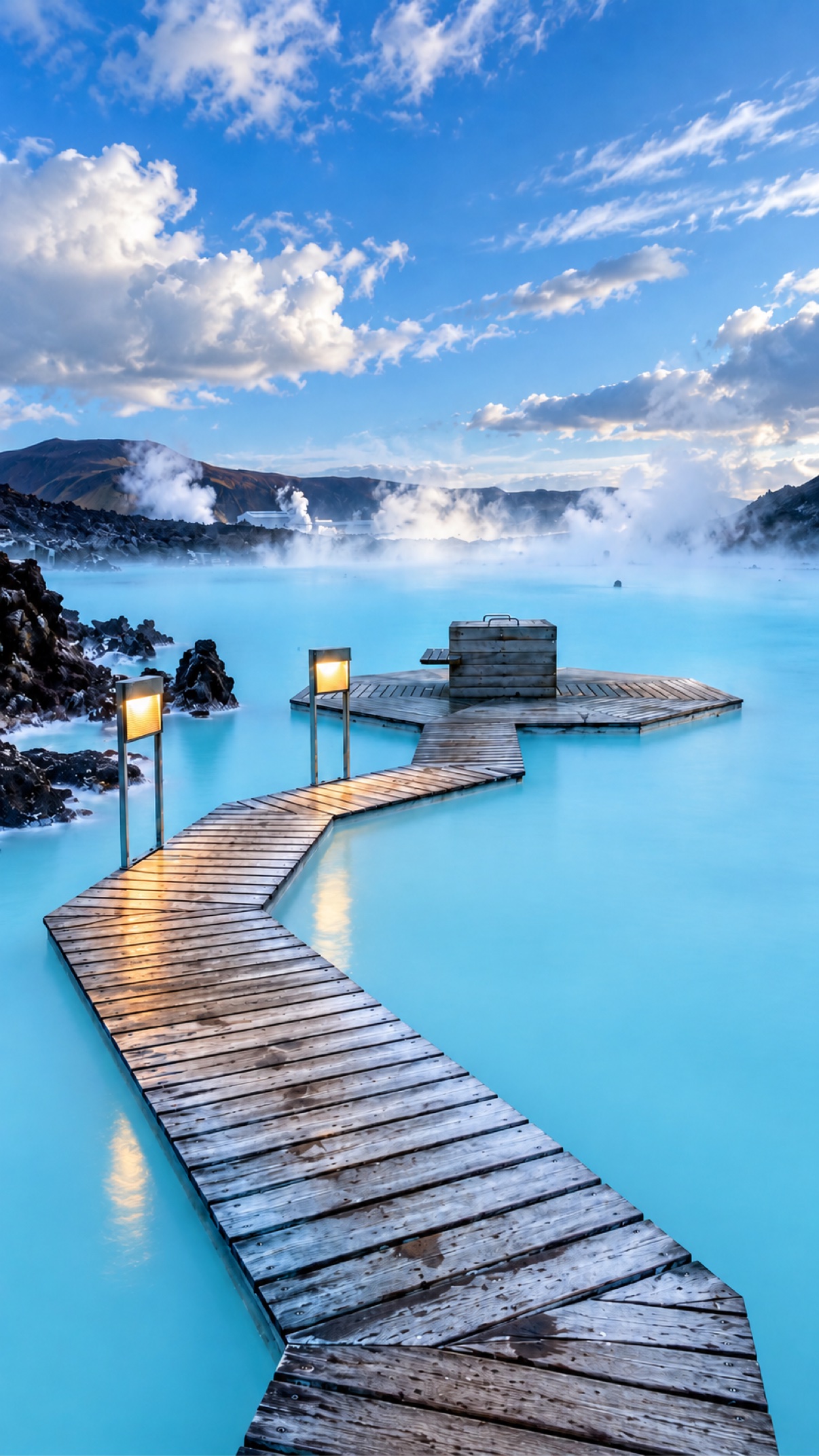
Blue Lagoon, Iceland
The youngest of the four, and an accident. In 1976 a geothermal plant's wastewater pooled in a lava field. Engineers expected it to seep away, but silica sealed the rock and a milky blue lagoon grew by itself. In the early 1980s a psoriasis patient soaked in it daily, his skin cleared, and word spread.
Twenty minutes from the airport, it is the classic first or last stop in Iceland. The dark months are the classic experience, steam in cold air and on clear nights the northern lights overhead.
Two thousand years of bathers have come and gone. The water is still hot.
Would you want to experience any of these someday?