★ Treasures
See Van Gogh’s Sunflowers
Worth making time for
Five paintings, four cities, one remarkably good reason to make museum time count.
Van Gogh’s Sunflowers began with a simple idea: he wanted to decorate a room for a friend.
In 1888, Vincent van Gogh moved to Arles in southern France, drawn by its intense sunlight and brilliant colors. He dreamed of creating an artists’ community there and invited Paul Gauguin to join him. While waiting for Gauguin to arrive, Van Gogh began painting sunflowers for the Yellow House, hoping their warmth would make his guest feel welcome.
He worked quickly. Fresh sunflowers wilted fast in the August heat, so every morning became a race against time. That urgency became part of the paintings. Some flowers are fully open, others are losing their petals, and some have already become heavy seed heads. In a single vase, Van Gogh captured different stages of life.
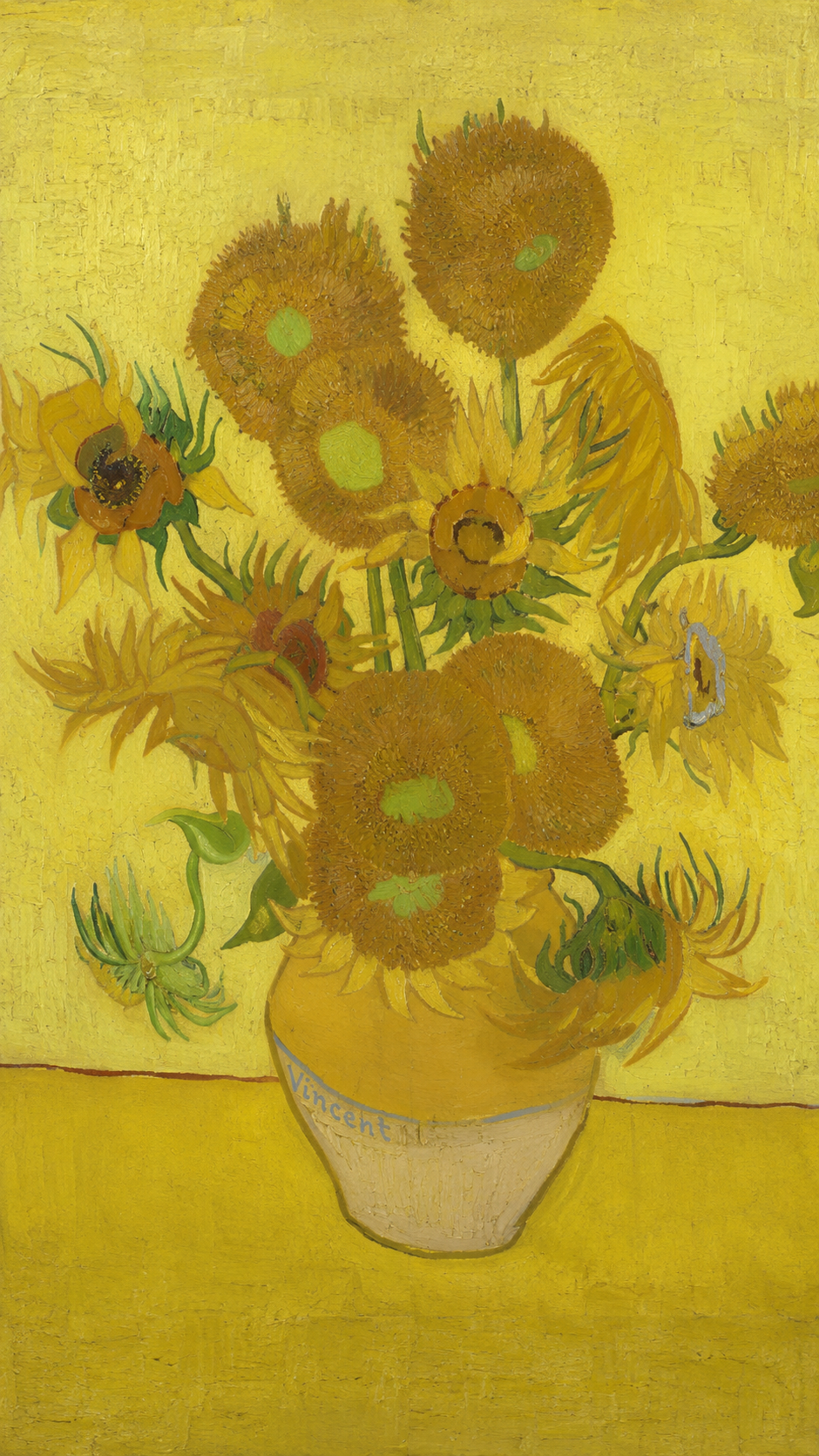
The paintings were also an experiment in color. Yellow, for Van Gogh, became the color of Provence, sunlight, friendship, and hope. In the most famous versions, he pushed the idea almost to its limit, painting yellow flowers against a yellow background while still making every bloom feel distinct.
Gauguin eventually arrived, but Van Gogh’s dream of an artists’ community did not last. Their relationship deteriorated, and Gauguin left Arles after only a few months. Yet Van Gogh returned to the sunflowers in early 1889, painting new versions of earlier compositions. By then, they had become more than decorations. They had become something personal. He later wrote simply, “The sunflower is mine.”
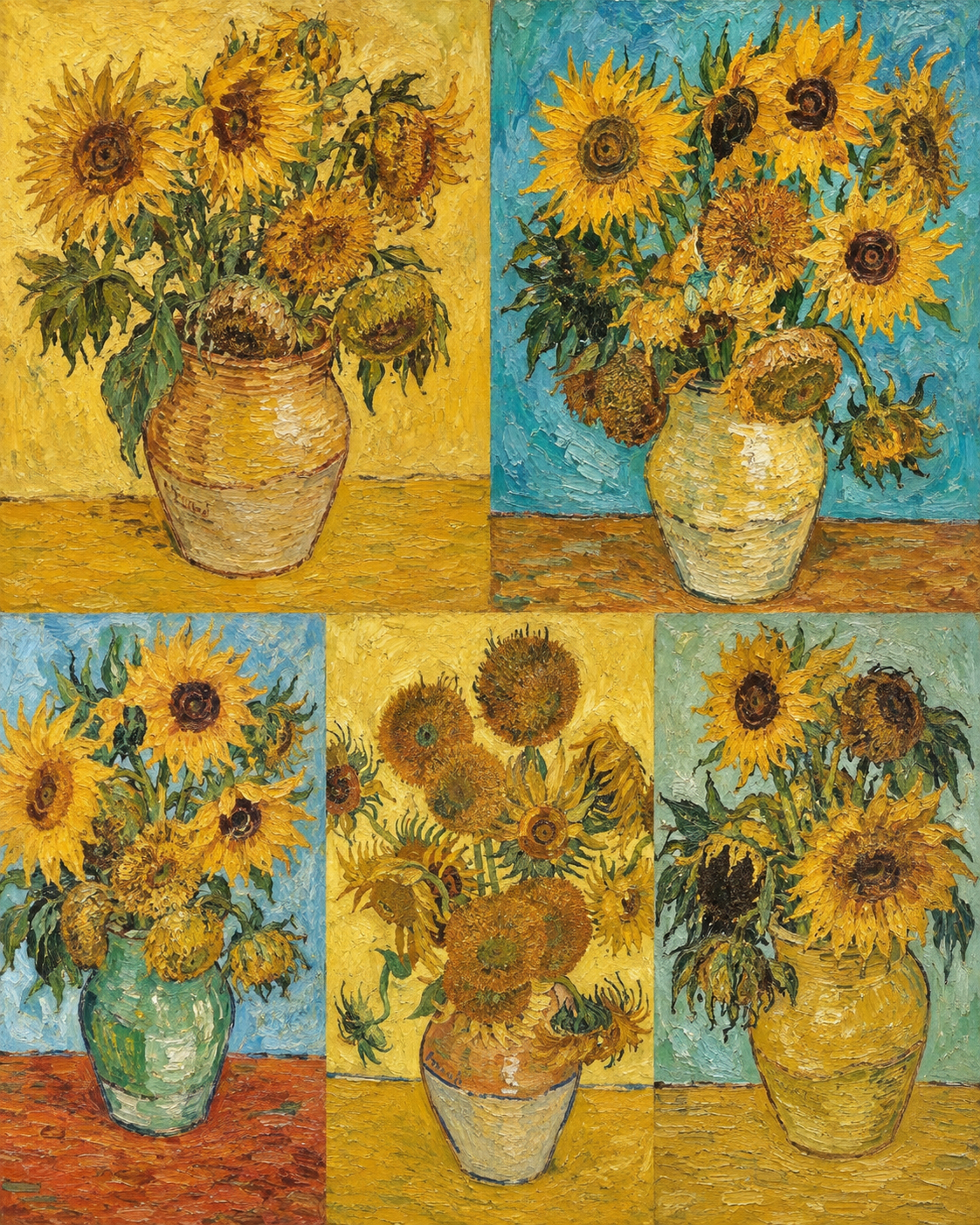
Van Gogh painted seven versions of the famous Arles sunflower vases. One was destroyed during the Second World War, and another remains in a private collection. Five are held by museums today.
They are scattered across the world.
Amsterdam’s Van Gogh Museum holds one of the great yellow versions. Munich has an earlier composition with sunflowers against turquoise. Tokyo’s Sompo Museum owns another yellow version. Philadelphia has a twelve flower version painted in 1889. And London’s National Gallery owns perhaps the most famous of them all, fifteen sunflowers glowing against a yellow background.
Except right now, the London painting is not in London.
Through October 11, 2026, it is in Philadelphia, hanging beside Philadelphia’s own Sunflowers. For a rare moment, two branches of Van Gogh’s sunflower experiment can be seen in the same museum.
That makes the current map unusually simple:
Amsterdam. Munich. Tokyo. Philadelphia, twice.
Seeing the paintings in person also explains why they became so famous. Reproductions flatten them into cheerful yellow flowers. The originals are stranger. Paint rises from the canvas in thick ridges. Some blooms are fresh, others are collapsing. The colors shift from lemon to ochre to almost brown.
What looks at first like a vase of flowers becomes a painting about friendship, hope, time, and things that do not last.
Van Gogh painted them for a friend he hoped would stay.
The friend left.
The sunflowers remained.
Would you want to experience any of these someday?