★★ History
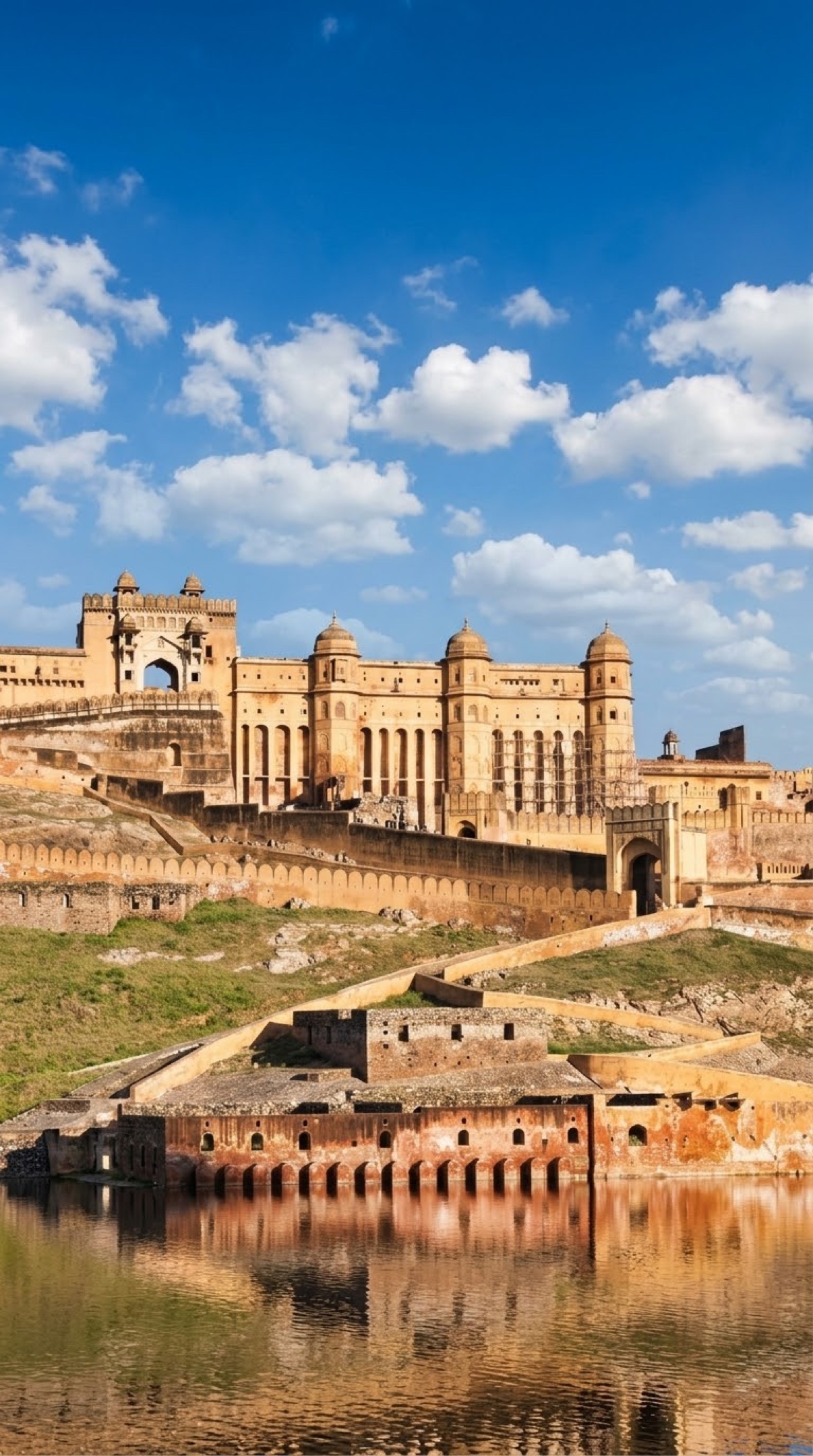
Amber Fort
Worth a detour
On a hill above Granada in southern Spain, the Alhambra glows red gold at sunset. Fly into Madrid, then take the high speed train three and a half hours south to Granada. Begun in 1238, it was the palace fortress of the Nasrid dynasty, the last Islamic kingdom in Spain, built up to its peak in the 1300s during the long centuries when Christian kingdoms were retaking the peninsula. It is the finest Islamic architecture in Europe: courtyards of carved stucco and tile where water runs everywhere, cool and deliberate. In 1829 the American writer Washington Irving lived for three months in what was then a crumbling ruin, and his Tales of the Alhambra made the palace famous around the world. Each summer the courtyards host an international festival of music and dance. Tickets for the Nasrid Palaces sell out months ahead in season, so book as soon as your dates are set. April, May, and October are the best months, with mild air and thinner crowds than summer.
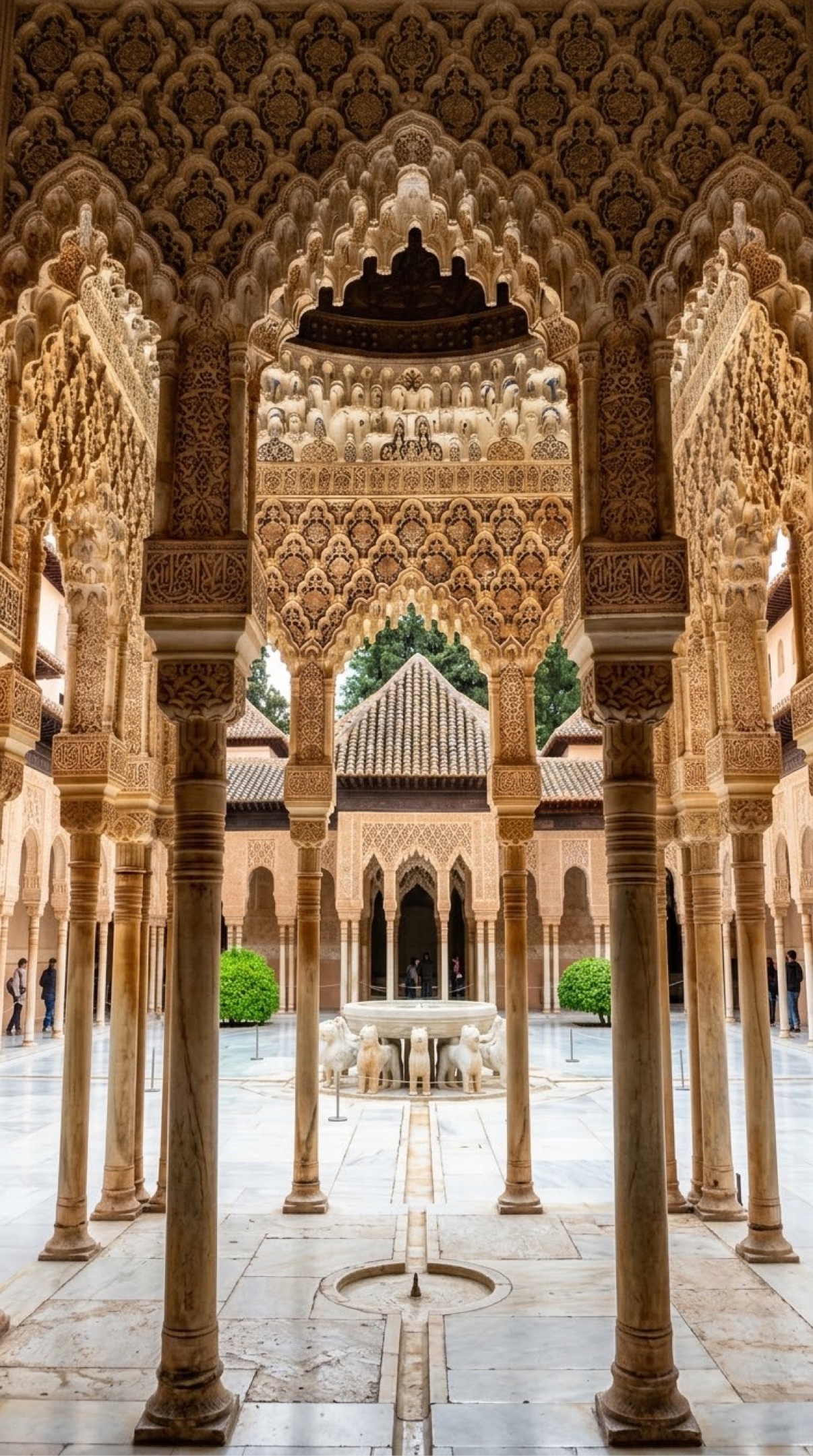
The highest achievement of Islamic architecture in Europe. Its ending is written into the hillside: in 1492 the last king, Boabdil, looked back at the palace from the pass still called the Moor's Last Sigh and wept, while his mother told him to weep like a woman for what he could not defend like a man.