★★ Wonders
Banff National Park
Worth a detour
Stand on a high ridge in the Rockies during a rainstorm and the water at your feet is choosing an ocean. On one side it will reach the Pacific, on the other the Atlantic. At Triple Divide Peak in Montana it gets a third choice, the Arctic. No other range on the continent holds this kind of power over water.
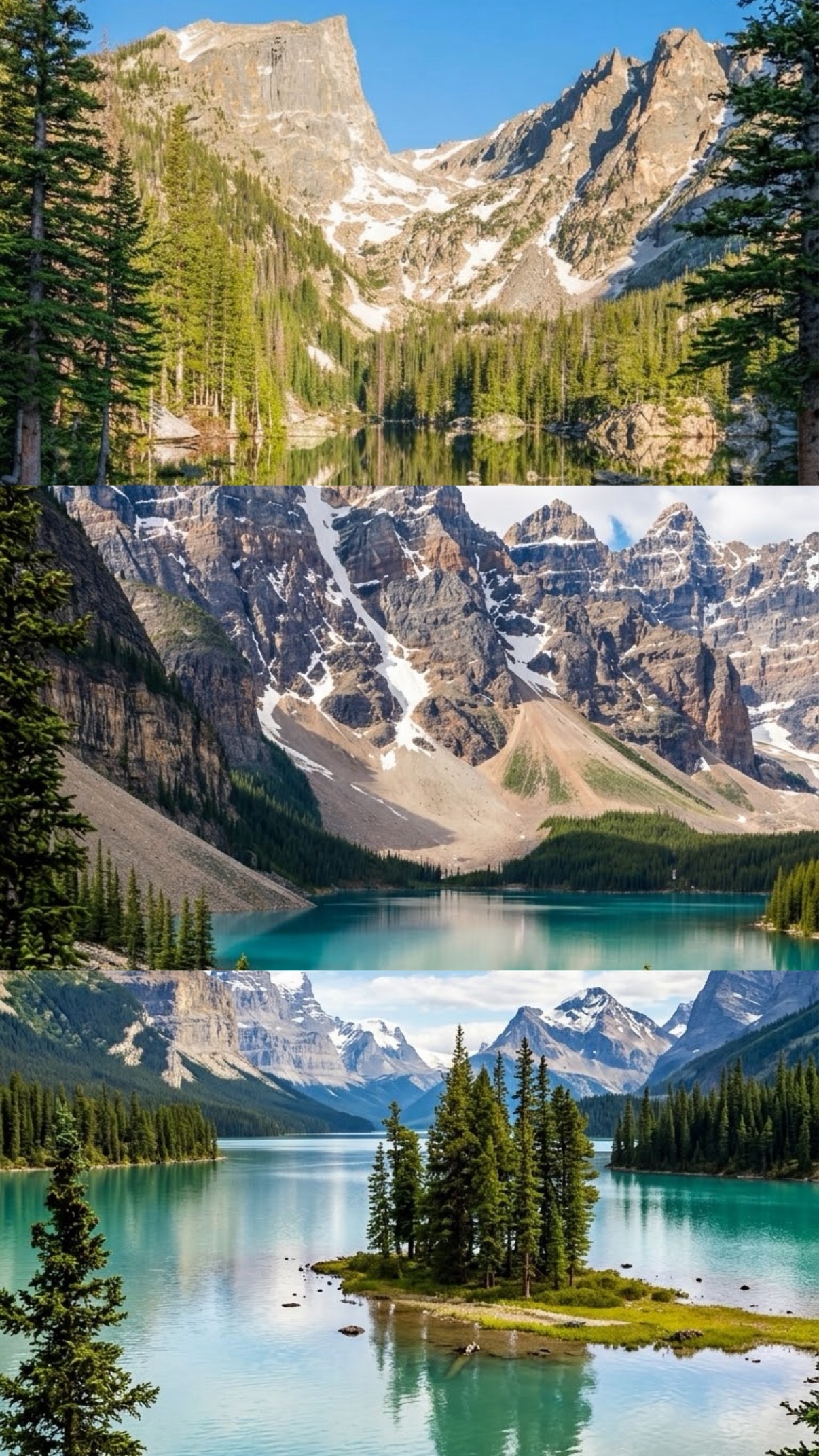
Three thousand miles from British Columbia to New Mexico, the Rockies are the spine of North America. The Continental Divide runs along their crest, and the great rivers of the West are all born on these slopes: the Colorado, the Columbia, the Missouri, the Rio Grande. What happens to the snowpack up here decides the water supply of tens of millions of people downstream. That is the quiet geographic fact beneath every postcard.
In Colorado the Divide becomes something you can stand on without climbing. Trail Ridge Road climbs to 12,183 feet, the highest continuous paved road in the country, running from gold aspen forest straight into alpine tundra. October is its last call. The elk are bugling in the meadows, and the road usually closes around mid month.
For a young America dreaming of the Pacific, the Rockies were the wall. Lewis and Clark nearly starved crossing the Bitterroots in 1805. The mountain men who followed mapped the country on foot, learning the passes from the tribes who had known them for centuries. Then a fur trader named Robert Stuart found the crack in the wall: South Pass, a twenty mile wide gentle saddle in Wyoming that wagons could actually cross. The Oregon, Mormon, and California trails all funneled through it. Historians argue that without that pass, the United States might never have secured the Pacific Northwest.
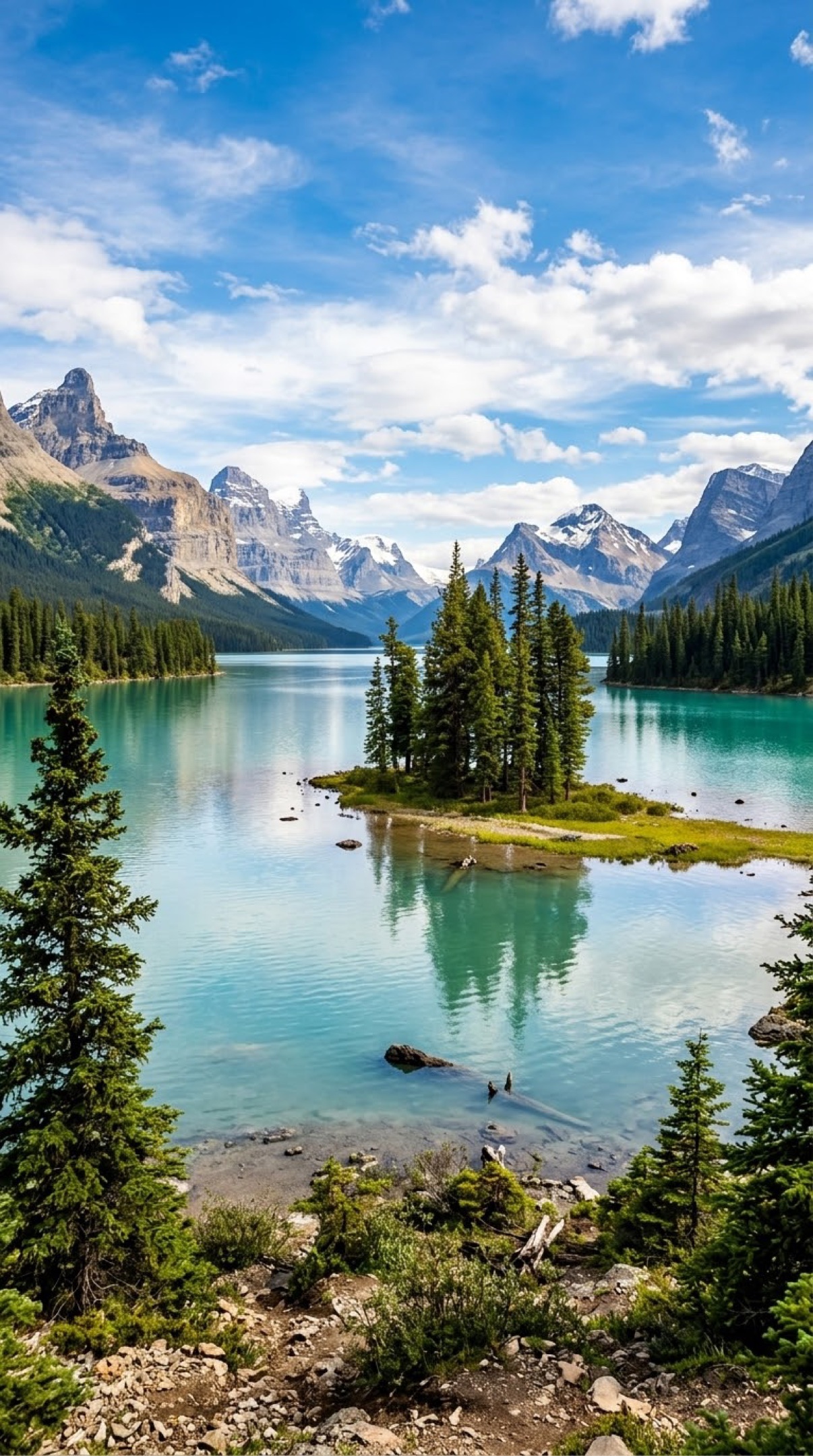
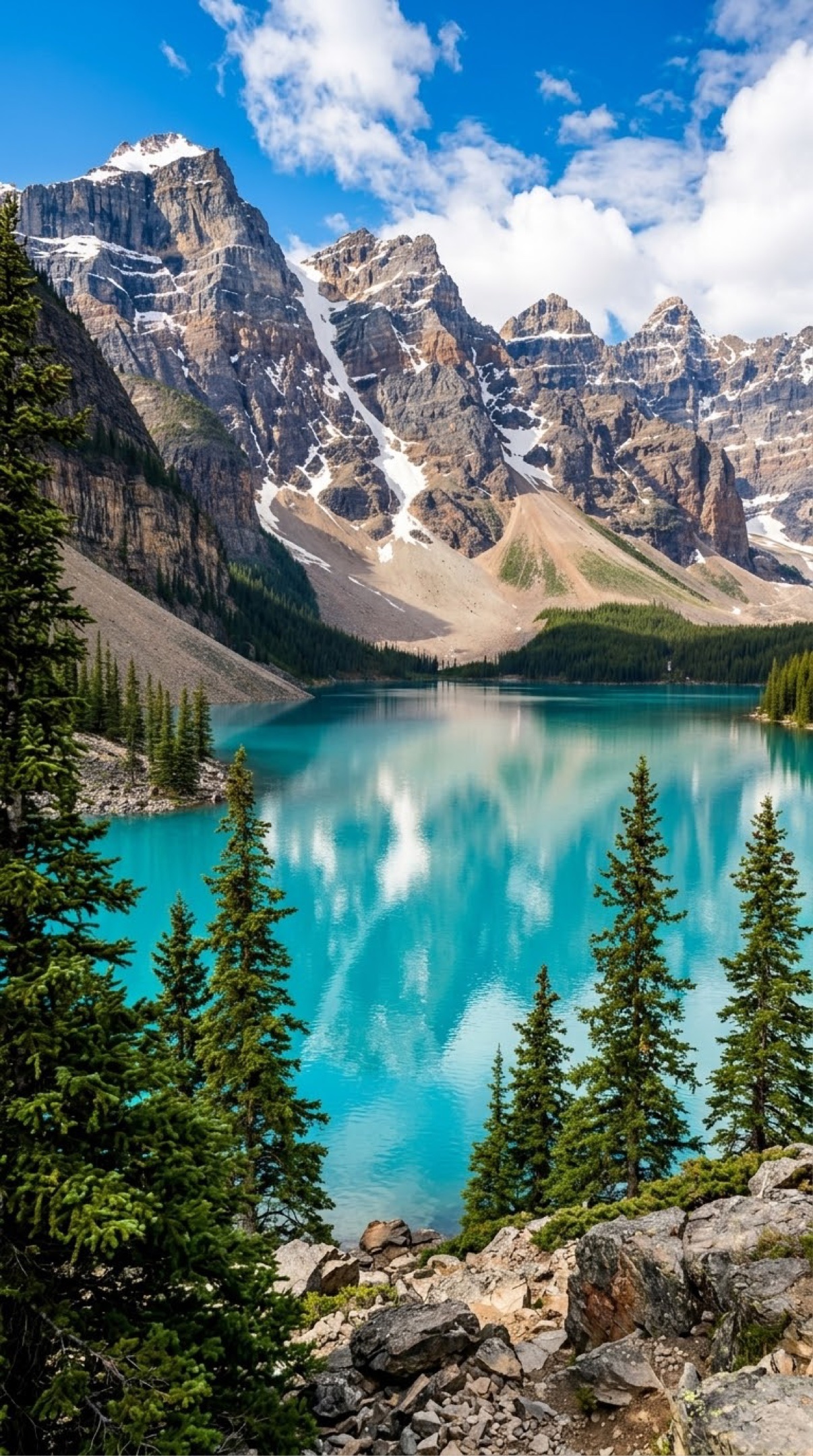
Canada's crossing came by two different means. The fur brigades came first, crossing the Divide at Athabasca Pass by canoe and packhorse, and the trading post at Jasper House gave the whole region its name. Then came the railroad: when Canadian Pacific workers found hot springs in the mountains in 1883, the government protected them within two years, and Banff became the birthplace of Canada's park system. The grand hotels and the turquoise lakes along the Icefields Parkway are the legacy of that bargain, tourism built on steel rails.
Glaciers did the decorating. Ice carved the sharp horns, dug the deep lakes, and ground the rock flour that turns the mountain lakes their impossible turquoise. No other range on Earth concentrates this much alpine drama along a single spine. Nine national parks share it, and every one of them is beautiful.
Would you want to experience any of these someday?